
How to Choose a Mattress Factory in Indonesia

Hotel di Praha Dekat Charles Bridge dan Old Town
13 Juni 2026
Cara Membuat Acara Nobar Piala Dunia yang Seru
24 Juni 2026
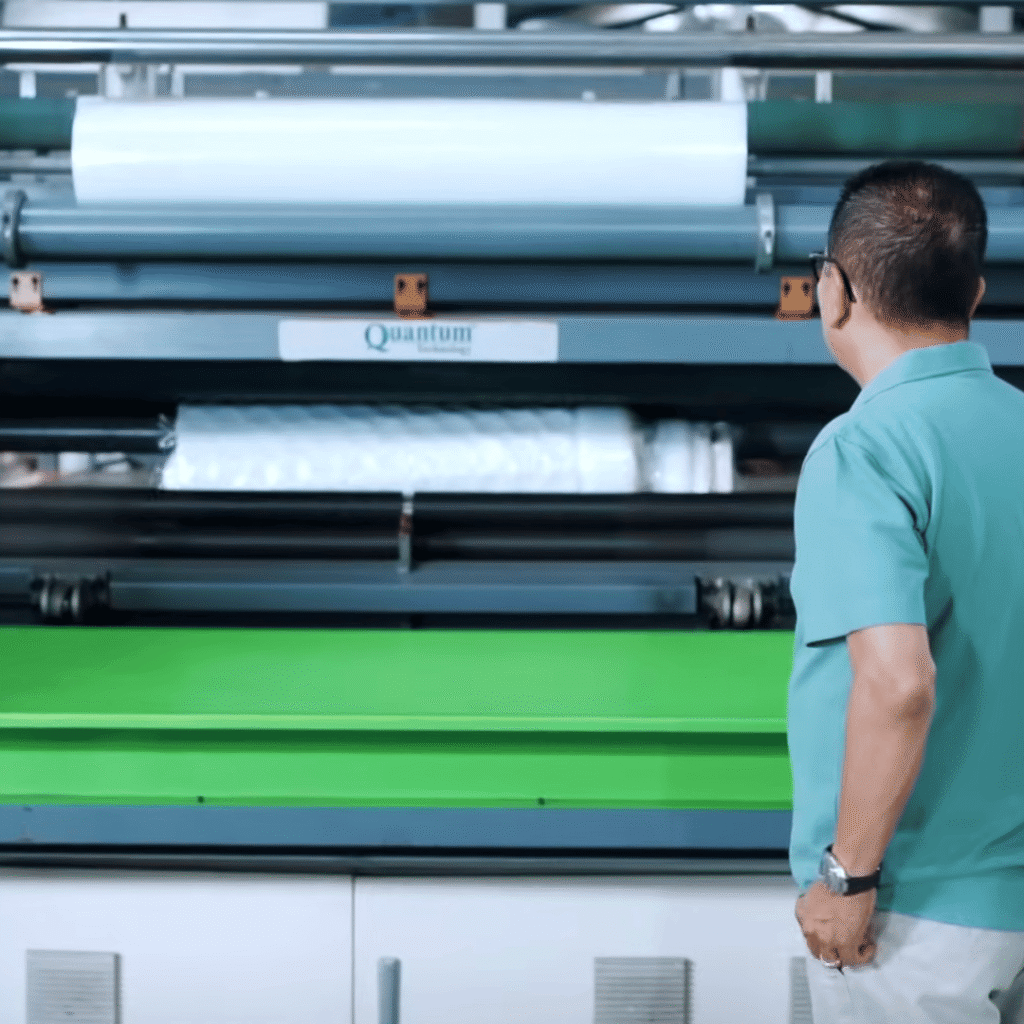
How to Choose a Mattress Factory in Indonesia. Choosing a mattress factory is not simply a matter of price per unit. For distributors, retailers, property developers, hospitality businesses, and private label brands, this decision shapes product quality consistency, supply reliability, customer satisfaction, and long-term business reputation.
Indonesia’s mattress industry continues to expand alongside growth in the property, retail, and hospitality sectors. Consumer awareness of sleep quality, material safety, and product durability is rising. This has drawn more manufacturers into the market, from small-scale workshops to nationally integrated production facilities.
The challenge is straightforward: not every mattress factory operates with the same production standards, quality control systems, material traceability, or supply capacity. A polished catalog may look convincing, but serious B2B buyers need to evaluate the factory behind the product.
This guide explains the key factors to consider when choosing a mattress factory in Indonesia as a long-term business partner.

Why Choosing the Right Mattress Factory Matters
A mattress is not an impulse purchase. Customers expect it to be comfortable, durable, hygienic, and safe to use every night. When a business chooses the wrong manufacturing partner, the risks extend well beyond product cost.
Poor factory selection may lead to inconsistent product quality, delayed deliveries, high return rates, customer complaints, warranty disputes, and lasting damage to brand trust. These problems are especially costly for businesses selling mattresses under their own brand or supplying large-scale projects such as hotels, apartments, dormitories, and residential developments.
The right mattress manufacturer, by contrast, offers several strategic advantages: consistent product quality from batch to batch, reliable production capacity during demand spikes, safer and more traceable materials, OEM and private label flexibility, better control over lead times and delivery schedules, and long-term support for business growth.
In a B2B context, choosing a mattress factory is not just a purchasing decision. It is a supply chain decision that directly affects your pricing strategy, customer experience, and brand positioning.

Matress Factory Quantum Group Area
Understanding the Main Types of Mattress Factories in Indonesia
Before evaluating specific factories, it is important to understand that not all mattress manufacturers operate under the same business model.
Integrated Mattress and Foam Factories
An integrated mattress factory manages multiple stages of production within a single ecosystem. This typically includes polyurethane foam manufacturing, spring system assembly, textile processing, mattress construction, finishing, packaging, and distribution support.
The principal advantage of this model is end-to-end control from raw material to finished product. When a factory produces its own foam or core components, it can maintain more consistent specifications, reduce dependence on external suppliers, and respond more efficiently to large orders.
Quantum Group, operating through PT Quantum Tosan Internasional, is one Indonesian manufacturer documented as an integrated production company. The company operates foam production and finished mattress manufacturing facilities across sites in Bogor and Banjarmasin, with a combined production area of approximately 18 hectares, a workforce of more than 800 employees, and a stated annual capacity of up to 480,000 mattress units.
For B2B buyers, this level of integration reduces the risk of inconsistent material supply and improves production traceability across orders.
Non-Integrated Mattress Factories
Non-integrated factories focus primarily on assembling finished mattresses, sourcing foam, springs, fabric, and other components from third-party suppliers. This model can produce competent products when the factory maintains strong assembly expertise and reliable vendor relationships. However, the quality of the final product depends heavily on the consistency of external material suppliers.
For buyers, the key question is not whether a factory is integrated or non-integrated, but whether it can demonstrate material consistency, supplier reliability, and quality control across repeated production runs.
OEM and Private Label Mattress Factories
OEM mattress factories produce products according to buyer-defined specifications, including dimensions, firmness levels, cover materials, brand labeling, and packaging requirements. This model is particularly relevant for retailers, e-commerce brands, hotel suppliers, and companies seeking to launch their own mattress line without building internal production capacity.
A capable OEM factory should be able to support custom product development, prototype sampling, technical specification control, private label packaging, and repeatable production quality.

Mattress Vacuum Packaging Process
Key Criteria for Choosing the Right Mattress Factory in Indonesia
1. Production Capacity and Scalability
Production capacity is one of the most important factors when selecting a mattress manufacturing partner. A factory may handle small initial orders comfortably, but your business also needs to know whether it can support growth over time.
Ask direct questions: How many units can the factory produce per month or per year? How many active production lines does it operate? How many shifts are available during peak demand? Can the factory absorb urgent or seasonal order increases without compromising quality? What is the average lead time for standard and custom products? Does output change significantly during public holidays or high-demand periods?
Capacity claims should not be accepted at face value. Request supporting data, visit the facility if possible, and ask for references from existing B2B clients.
As a benchmark, Quantum Group publicly documents a production capacity of up to 480,000 mattress units per year, supported by more than 800 employees across an 18-hectare production area. This type of information helps buyers assess whether a manufacturer is positioned for local, national, or export-scale demand.
For your own business, align the factory’s stated capacity with your current order volume and projected growth over at least the next three years.
2. Product Range and Manufacturing Capability
A strong mattress factory should be able to produce more than one product category. Market demand shifts over time; your business may need standard foam mattresses today, and spring beds, foldable mattresses, mattress toppers, pillows, sofa-in-a-box products, or hotel bedding packages tomorrow.
Working with a manufacturer capable of supporting multiple product categories provides business flexibility and reduces supplier complexity. You will not need to manage separate factories for product lines that fall within the same bedding ecosystem.
A well-rounded mattress manufacturer may offer foam mattresses, spring beds, hybrid mattresses, foldable mattresses, mattress toppers, pillows and bolsters, sofa-in-a-box products, hotel and hospitality bedding sets, and OEM or private label product lines. The broader the factory’s technical capability, the easier it is to expand your portfolio without rebuilding your supplier network.
3. Material Quality and Foam Specifications
A mattress that feels comfortable at first may not perform well over time if the underlying materials are weak, inconsistent, or inadequately tested. For foam-based mattresses, density, resilience, compression resistance, and long-term durability are the key technical indicators.
Foam density is typically measured in kilograms per cubic meter (kg/m³). Higher-density foam generally offers better body support and a longer service life, though the appropriate specification depends on product positioning, mattress design, and target customer segment.
When evaluating a mattress factory, ask specifically: Does the factory produce its own foam or source it externally? What foam densities are available across product lines? Are material specifications consistent across production batches? Does the factory perform compression, tensile strength, or durability testing? Are materials screened for hazardous substances? Can the factory supply technical data sheets for its core materials?
If your business serves families, hotels, dormitories, hospitals, or export markets, material safety and batch consistency become especially important. Quantum Group publicly promotes lead-free polyurethane foam certified by TÜV Rheinland, and company documentation references testing and quality control procedures for polyurethane foam used in its mattress and bedding products.

Foam Cutting Quantum Group
4. Certifications and Quality Standards
Certifications verify that a factory has been assessed against recognized quality, safety, or management standards by an independent third party. For B2B procurement, they reduce risk and support internal vendor approval processes.
Relevant certifications for an Indonesian mattress manufacturer may include ISO 9001 for quality management systems, SNI (Indonesian National Standard) for domestic market compliance, TÜV Rheinland testing for specific material safety claims, eco-related or textile certifications depending on the product category, and export compliance documentation for international markets.
Always request valid certification documents, not just verbal or marketing references. Verify the certificate name, scope, issuing body, issue date, expiry period, and whether the certification applies to the factory, the specific material, or the finished product.
Quantum Group states that its lead-free foam carries TÜV Rheinland certification, and company materials reference ISO 9001 in relation to product and production quality. These claims should still be verified directly as part of B2B due diligence before any contract is signed.
5. Factory Location and Distribution Network
Indonesia’s geography makes logistics a major factor in supplier selection. A factory’s location affects delivery time, shipping cost, regional availability, and the ability to respond quickly to urgent orders.
A manufacturer operating from a single region may be adequate for local distribution. However, if your business serves customers across Java, Kalimantan, Sulawesi, Eastern Indonesia, or international markets, a broader production and distribution footprint offers meaningful efficiency advantages.
When evaluating location and logistics, ask: Where are the production facilities located? Does the factory support national distribution? Does it maintain warehouses or work with logistics partners? Can it ship directly to project sites, retail stores, or regional distributors? How does it handle large-volume delivery? What are typical delivery timelines by region?
Quantum Group operates production facilities in Bogor and Banjarmasin, providing a documented geographic presence across Java, Sulawesi, and Kalimantan. For businesses with national distribution requirements, a multi-location production setup of this kind can offer a meaningful logistical advantage.
6. Industry Track Record and Reputation
A factory that has operated for many years has likely navigated changing market conditions, supply chain disruptions, product complaints, quality audits, and varying client requirements. Experience is not a guarantee of quality, but it is evidence of operational resilience.
When assessing reputation, consider: How long has the company operated? Does it have documented experience with B2B clients? Has it supplied hotels, property projects, retailers, or national distributors? Does it have export experience? Are there independent media references or verifiable third-party mentions? How does the factory handle complaints and warranty claims?
PT Quantum Tosan Internasional, the legal entity behind Quantum Group, is publicly documented as having manufactured mattress and bedding products since 1999. The company has been referenced in Indonesian business media in connection with its involvement in the spring bed industry and its development of lead-free foam products.
International activity can serve as a credibility signal. Quantum Group has documented the opening of a showroom in Prague, Czech Republic. For B2B buyers, export market engagement does not automatically guarantee domestic suitability, but it can indicate that the manufacturer has experience meeting standards beyond the local market.
7. OEM Flexibility and Customization Capability
If your business requires customized mattress products, OEM capability becomes essential. This is particularly relevant for retailers, hotel suppliers, property developers, institutional buyers, and private label bedding brands.
Customization options may include mattress size, thickness, firmness level, foam density, spring system type, fabric and cover material, quilting pattern, edge support design, packaging format, brand labeling, and private label documentation.
A capable OEM mattress factory should be able to translate a product concept into a repeatable manufacturing specification. It should also provide sampling, technical feedback, minimum order quantity information, lead time estimates, and clear quality control procedures for custom runs.
Before committing, request examples of previous OEM work, sample development timelines, revision policies, and production tolerances. A strong factory will not simply agree to any customization request; it will clarify what is technically feasible, what may affect cost, and what could influence long-term product durability.

Foam Sheet Extrusion Line
Common Mistakes to Avoid When Choosing a Mattress Factory
Choosing based only on unit price. Low pricing can appear attractive initially, but the cheapest supplier is not always the most cost-effective partner. Poor quality, production inconsistency, late delivery, and high return rates can generate costs that far exceed the apparent savings. Evaluate total business impact: product lifespan, complaint rate, logistics costs, warranty handling, and brand reputation.
Not verifying production capacity. Capacity claims in catalogs need to be verified. Visit the facility if possible, inspect production lines, ask about shift schedules, and request historical order fulfillment data. A factory may produce samples quickly but struggle to deliver hundreds or thousands of units consistently over time.
Ignoring material safety. Mattresses are in close nightly contact with the human body. Material safety should be a non-negotiable priority, especially for products targeting families with young children, hotels, schools, dormitories, and healthcare-related environments. Request documentation related to foam safety, chemical screening, textile safety, and all relevant certifications.
Overlooking supply chain risk. A reliable factory should have documented contingency plans for supply disruptions, equipment failures, labor constraints, and sudden order spikes from other clients. How a factory answers these questions reveals the maturity of its operations management.
Failing to define quality standards in writing. Verbal agreements are insufficient. Before placing large orders, define technical specifications, acceptable production tolerances, packaging requirements, delivery schedules, defect handling procedures, and warranty terms in a written agreement. This protects both parties and reduces misunderstandings during production.
Practical Checklist Before Signing with a Mattress Manufacturer
Before finalizing a mattress factory partnership in Indonesia, review the following:
- Confirm annual and monthly production capacity with supporting data
- Verify whether the factory is integrated or dependent on external material suppliers
- Review available mattress and bedding product categories
- Request foam density and material specification details for each relevant product
- Obtain and verify valid certification documents
- Assess quality control procedures, including testing methods and defect thresholds
- Visit the production facility if possible
- Request B2B client references and follow up directly
- Clarify OEM and private label capabilities, including sample timelines
- Review lead time, minimum order quantities, and payment terms
- Discuss logistics coverage across all regions your business serves
- Confirm warranty terms and complaint handling procedures
- Evaluate export experience if your business targets international markets
- Put all product specifications, service expectations, and performance standards in writing before signing
FAQ: Choosing a Mattress Factory in Indonesia
1. What is the difference between an integrated and a non-integrated mattress factory?
An integrated factory manages multiple production stages internally: foam manufacturing, mattress assembly, finishing, and packaging within a single production ecosystem. This gives the manufacturer direct control over material consistency and product quality across batches. A non-integrated factory purchases core materials from external suppliers and focuses primarily on assembly, meaning final product quality is contingent on third-party supply consistency.
2. What certifications should I check before choosing a mattress factory?
For the Indonesian domestic market, verify compliance with applicable SNI standards. For quality management systems, ISO 9001 is a relevant benchmark. For material safety, independent testing by bodies such as TÜV Rheinland can verify specific claims, for example, whether foam materials are free from hazardous substances including lead. Always request valid documents and check the scope, issuing body, and expiry date of any certification presented.
3. How can I verify a mattress factory’s production capacity?
The most reliable method is a direct facility visit. In addition, request production data, active production line counts, shift schedules, client references, and historical delivery records. Reliable manufacturers should be able to explain their capacity clearly and provide documentary evidence rather than verbal estimates alone.
4. Can Indonesian mattress factories support export markets?
Yes. Several Indonesian mattress manufacturers have expanded into international markets. Quantum Group, for example, has documented activity in European markets through a showroom in Prague, Czech Republic. Export market engagement can indicate that a manufacturer’s production standards have been tested against more demanding requirements than the domestic market alone.
5. Is OEM manufacturing important for mattress businesses?
OEM manufacturing is essential if you intend to sell mattresses under your own brand or require products built to custom specifications. A capable OEM factory can support product development, dimensional customization, firmness selection, material choices, branding, packaging, and repeatable production quality across multiple order runs.
6. Is it better to choose a factory with multiple production locations?
For businesses serving multiple regions across Indonesia, a manufacturer with production or distribution facilities in several strategic locations offers meaningful logistical advantages: reduced delivery times, better supply availability, and more manageable nationwide distribution costs. For export-oriented businesses, documented international distribution experience is an additional consideration.
Conclusion
Choosing the right mattress factory in Indonesia requires an evaluation that goes well beyond price comparison. A serious B2B buyer should assess production capacity, factory integration model, material quality, certification validity, distribution coverage, industry track record, OEM capability, and long-term supply reliability.
The best manufacturing partner is not necessarily the lowest-cost one. It is the factory that can consistently deliver safe, durable, and well-made products at the scale and quality your business needs and sustain that performance across years of commercial partnership.
For distributors, retailers, hospitality businesses, property developers, and private label brands, the right mattress manufacturer can become a long-term growth partner, one that helps maintain product quality, reduce operational risk, expand your product portfolio, and strengthen customer trust.
If you are currently evaluating mattress factory options in Indonesia, Quantum Group, operating through PT Quantum Tosan Internasional, is one manufacturer worth including in your supplier assessment. Its documented integrated production model, multi-location facilities across Bogor, and Banjarmasin, lead-free foam certification from TÜV Rheinland, ISO 9001 references, and verified activity in international markets position it as a relevant candidate for B2B buyers seeking a scalable mattress and bedding manufacturing partner.